


| Issue |
Europhysics News
Volume 57, Number 3, 2026
The evolving world of drones
|
|
|---|---|---|
| Page(s) | 20 - 23 | |
| Section | Features | |
| DOI | https://doi.org/10.1051/epn/2026309 | |
| Published online | 08 July 2026 | |
The rise of intelligent drone swarms
1
Centre de Recherches sur la Cognition Animale, Centre de Biologie Intégrative (CBI), Centre National de la Recherche Scientifique (CNRS) & Université de Toulouse Paul Sabatier, France
2
École Nationale de l’Aviation Civile, Université de Toulouse, France
Abstract
In Michael Crichton’s Prey [1], a cloud of nano-robots escapes human control and becomes something far more unsettling than a machine. It stretches, contracts, reorganizes, and even hunts. It behaves like a living swarm endowed with a form of collective intelligence, even though no single unit possesses a brain (see Striking image). The story was fiction, yet it captured an idea that has become increasingly important in complexity science. When many simple agents interact locally, complex and sometimes surprising behavior can emerge at the level of the group.
© European Physical Society, EDP Sciences, 2026
 |
Picture From fiction to reality, early visions of autonomous swarms imagined self-organizing clouds of nano-robots, while today similar collective dynamics are explored with real drones interacting through simple local rules (AI-generated picture). |
Today, the agents are no longer imaginary nanobots. They are real drones moving through the air. And one of the most interesting questions in modern collective robotics is how to make these swarms not only coordinated, but also adaptive, robust, and able to reorganize when conditions change.
This idea did not come from engineering alone. Over the past twenty years, researchers have studied how animals move together. Fish schools, bird flocks, insect swarms, and even human crowds have been explored as systems of active matter, meaning groups of self-propelled individuals that self-organize through local interactions rather than central control [2]. One key lesson stands out. Large-scale coordination does not require global knowledge. A fish does not know the shape of the whole school, and a bird does not follow a leader’s detailed plan. Instead, each individual reacts to nearby neighbors using simple interaction rules. These include a tendency to align with others, to keep some distance, and to stay close enough to remain part of the group.
For physicists, this has led to powerful ideas about order and disorder, fluctuations, and phase transitions [3]. For roboticists, it suggests something more practical. Swarms of drones might be controlled using similar principles. This is appealing because animal groups show a remarkable mix of stability and flexibility. They can move as one, change direction quickly, pass through cluttered environments, and recover from disturbances. These are exactly the properties needed for drone swarms in real-world tasks such as monitoring forests, inspecting damaged infrastructure, or exploring complex environments.
The goal is not to copy nature for its own sake. It is to understand how simple local interactions can produce useful collective behavior, and then use those ideas in engineered systems [4]. This approach is now shaping many areas of robotics. In underwater vehicles, for example, researchers have turned to fish and marine animals to design more agile and efficient machines, rather than relying only on rigid torpedo-like shapes [5]. In both air and water, biological structures such as wings, feathers, and fins have inspired new ways to control fluid flow, improving lift, reducing drag, and enhancing maneuverability, especially for small vehicles.
On the collective side, progress has been just as striking. Drone swarms are increasingly designed to operate without central control. Each unit relies on local information and interacts with nearby neighbors. This reduces the need for heavy communication and makes the system more robust. Experiments with groups of quadcopters have shown that stable flocking is possible even in challenging conditions, including wind, delays, and sensing noise. Other approaches push minimalism further by relying only on vision. In such systems, robots coordinate without GPS, without explicit communication, and without measuring exact positions or velocities, yet they still manage to move together in a coherent way. In parallel, distributed swarm strategies have been developed to adapt spatial coverage in real time, allowing drones to focus on areas of interest while maintaining overall coordination.
Across these studies, a common idea emerges. Robust collective behavior does not require perfect information. It depends more on how agents interact than on how much they know.
A clear example comes from our recent work on bio-inspired drone swarms [6]. In this system, each drone interacts with only a few most influential neighbors and follows two simple rules, alignment and attraction similar as those used by schooling fish (fig. 1). By changing the strength of these interactions, we observed different collective states. In one case, the swarm remains cohesive but loosely organized. In another, it becomes highly aligned and moves as a tight, coordinated group. Between these two states lies a transition region where the system behaves in a very different way (fig. 2).
 |
FIG. 1 Test of the bioinspired flocking model using a swarm of Tello EDU drones in the indoor drone flight arena of the French National School of Civil Aviation in Toulouse, France (David villa, ScienceImage, CBI, CNRS, Toulouse). |
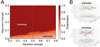 |
FIG. 2 A. Phase diagram showing emergent collective states of a drone swarm as alignment and attraction vary. Different collective behaviors emerge as interaction strengths change, ranging from loosely organized swarms (swarming state) to highly aligned motion (schooling state), with a transition region where the system becomes highly sensitive. and responsive to disturbances (critical state). B. 3D-trajectories and their projections on the XY plane of the collective states displayed by a swarm of 10 Bebop 2 Parrot drones flying in free space. |
Near this transition, the swarm is in a critical state and becomes highly sensitive and reactive. Small disturbances can lead to large collective responses. This is a familiar idea in physics, where systems near a phase transition show strong fluctuations and high responsiveness [7]. What is remarkable here is that the same idea appears in a group of flying robots. Experiments with real drones show that when the swarm operates near this transition, it reacts more strongly to disturbances. When an intruder approaches, the group can quickly turn, spread out, and reorganize, then return to a coherent state within a short time (fig. 3).
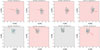 |
FIG. 3 Sequence of snapshots from experiments showing a drone swarm (green dots) in a critical state reacting to an approaching intruder (red dot), with rapid reconfiguration followed by recovery of alignment. The drone swarm operating near a transition regime reacts strongly to a disturbance, reorganizing quickly before returning to a coherent state, illustrating the balance between stability and responsiveness. |
This suggests a useful design principle. By tuning interaction rules inspired by animal groups, drone swarms can be placed in a regime where they are both stable and responsive. Stability ensures that the group does not break apart. Responsiveness allows it to react quickly when needed. These two properties are often seen as opposites, yet near a transition they can coexist.
This insight has practical implications. A swarm might operate in a stable mode during routine movement. When rapid adaptation is required, for example during exploration or in response to a threat, it could shift toward a more responsive state. This does not require complex global control. It only requires adjusting local interaction strengths.
These ideas connect with broader developments in robotics. Distributed predictive control has shown how swarms can move safely through cluttered environments while coordinating locally and adapting to uncertainty [8]. High-speed planning methods now allow swarms to navigate unknown environments while avoiding obstacles and maintaining coordination [9]. At the same time, miniature flying robots have demonstrated that autonomous swarming is possible in real outdoor settings without external infrastructure, relying only on onboard sensing and decentralized control [10].
Taken together, these advances show that the field is moving from simple models to real-world system. Drone swarms are no longer just simulations. They are becoming practical tools.
Looking ahead, the most exciting developments may come from a shift in perspective. Until now, much of the work has focused on self-organization based on fixed rules. But many natural systems go further [7]. They process information, adapt to changing conditions, and adjust their behavior over time. This has led to the idea of intelligent active matter, where collective motion is linked to sensing, inference, and decision-making.
For drone swarms, this opens new possibilities. Future systems may not only maintain formation or avoid collisions. They may detect changes in their environment, adjust their interaction patterns, and switch between different modes of behavior just as fish schools. They may use memory, learning, or prediction to improve performance. In such systems, intelligence would not reside in a single unit, but in the collective dynamics of the group.
This brings us back to the vision suggested by Prey. Crichton imagined a swarm that behaved as more than the sum of its parts [1]. Today, science is beginning to turn that idea into reality, not in a dramatic or dangerous way, but in a controlled and constructive one. Physics provides the tools to understand how collective animal behavior emerges. Biology offers examples that have been refined over millions of years. Robotics makes it possible to test and apply these ideas.
The challenge now is not only to make drones fly together, but to design swarms that can adapt, respond, and perhaps one day show forms of collective intelligence. When that happens, emergent dynamics in drone swarms will not just be a technical achievement. They will also offer a new way to think about how complex behavior arises from simple interaction rules.
About the Authors

Guy Theraulaz is Senior Research Director at the French National Centre for Scientific Research (CNRS), Toulouse. Trained in biology, he studies collective behavior across animals and humans, combining experiments, modeling, and robotics. Co-author of seminal books, he pioneered research on swarm intelligence and self-organization.

Gautier Hattenberger is a faculty member at the French National School for Civil Aviation (ENAC) in Toulouse, where he teaches flight mechanics and UAV systems. His research focuses on the control, guidance, and navigation of dynamical systems, ranging from individual aircraft to swarms.
References
- M. Crichton, Prey, New York: HarperCollins (2002) [Google Scholar]
- T. Vicsek and A. Zafeiris, Physics Reports 517, 71 (2012) [CrossRef] [Google Scholar]
- A. Cavagna, I. Giardina and T. S. Grigera, Physics Reports 728, 1 (2018) [Google Scholar]
- E. Bonabeau, M. Dorigo and G. Theraulaz, Swarm Intelligence: From Natural to Artificial Systems, New York: Oxford University Press (1999) [Google Scholar]
- F. E. Fish, Bioinspiration & Biomimetics 15, 025001 (2020) [Google Scholar]
- M. Verdoucq et al., arXiv preprint arXiv:2512.21196 (2025) [Google Scholar]
- G. Lin et al., Experimental evidence of stress-induced critical state in schooling fish. PRX Life 3, 033018 (2025) [Google Scholar]
- E. Soria, F. Schiano and D. Floreano, IEEE Robotics and Automation Letters 7, 73 (2022) [Google Scholar]
- C. Toumieh, and D. Floreano, IEEE Robotics and Automation Letters 9, 1 (2024) [Google Scholar]
- X. Zhou et al., Science Robotics 7: eabm5954 (2022) [Google Scholar]
All Figures
|
Picture From fiction to reality, early visions of autonomous swarms imagined self-organizing clouds of nano-robots, while today similar collective dynamics are explored with real drones interacting through simple local rules (AI-generated picture). |
| In the text | |
|
FIG. 1 Test of the bioinspired flocking model using a swarm of Tello EDU drones in the indoor drone flight arena of the French National School of Civil Aviation in Toulouse, France (David villa, ScienceImage, CBI, CNRS, Toulouse). |
| In the text | |
|
FIG. 2 A. Phase diagram showing emergent collective states of a drone swarm as alignment and attraction vary. Different collective behaviors emerge as interaction strengths change, ranging from loosely organized swarms (swarming state) to highly aligned motion (schooling state), with a transition region where the system becomes highly sensitive. and responsive to disturbances (critical state). B. 3D-trajectories and their projections on the XY plane of the collective states displayed by a swarm of 10 Bebop 2 Parrot drones flying in free space. |
| In the text | |
|
FIG. 3 Sequence of snapshots from experiments showing a drone swarm (green dots) in a critical state reacting to an approaching intruder (red dot), with rapid reconfiguration followed by recovery of alignment. The drone swarm operating near a transition regime reacts strongly to a disturbance, reorganizing quickly before returning to a coherent state, illustrating the balance between stability and responsiveness. |
| In the text | |
Current usage metrics show cumulative count of Article Views (full-text article views including HTML views, PDF and ePub downloads, according to the available data) and Abstracts Views on Vision4Press platform.
Data correspond to usage on the plateform after 2015. The current usage metrics is available 48-96 hours after online publication and is updated daily on week days.
Initial download of the metrics may take a while.