


| Issue |
Europhysics News
Volume 57, Number 3, 2026
The evolving world of drones
|
|
|---|---|---|
| Page(s) | 28 - 33 | |
| Section | Features | |
| DOI | https://doi.org/10.1051/epn/2026311 | |
| Published online | 08 July 2026 | |
The liquid dam: when jamming sustains flow
Aix Marseille Université, CNRS, IUSTI, France
Abstract
Most gravity-driven flows slow down as they spread — from honey on a table to lava on a volcano. It is a law of common experience. Here, we reveal a striking exception: dense shear-thickening suspensions form a liquid dam that advances at constant speed — independent of thickness, released volume, or even slope.
© European Physical Society, EDP Sciences, 2026
A flow that should not exist
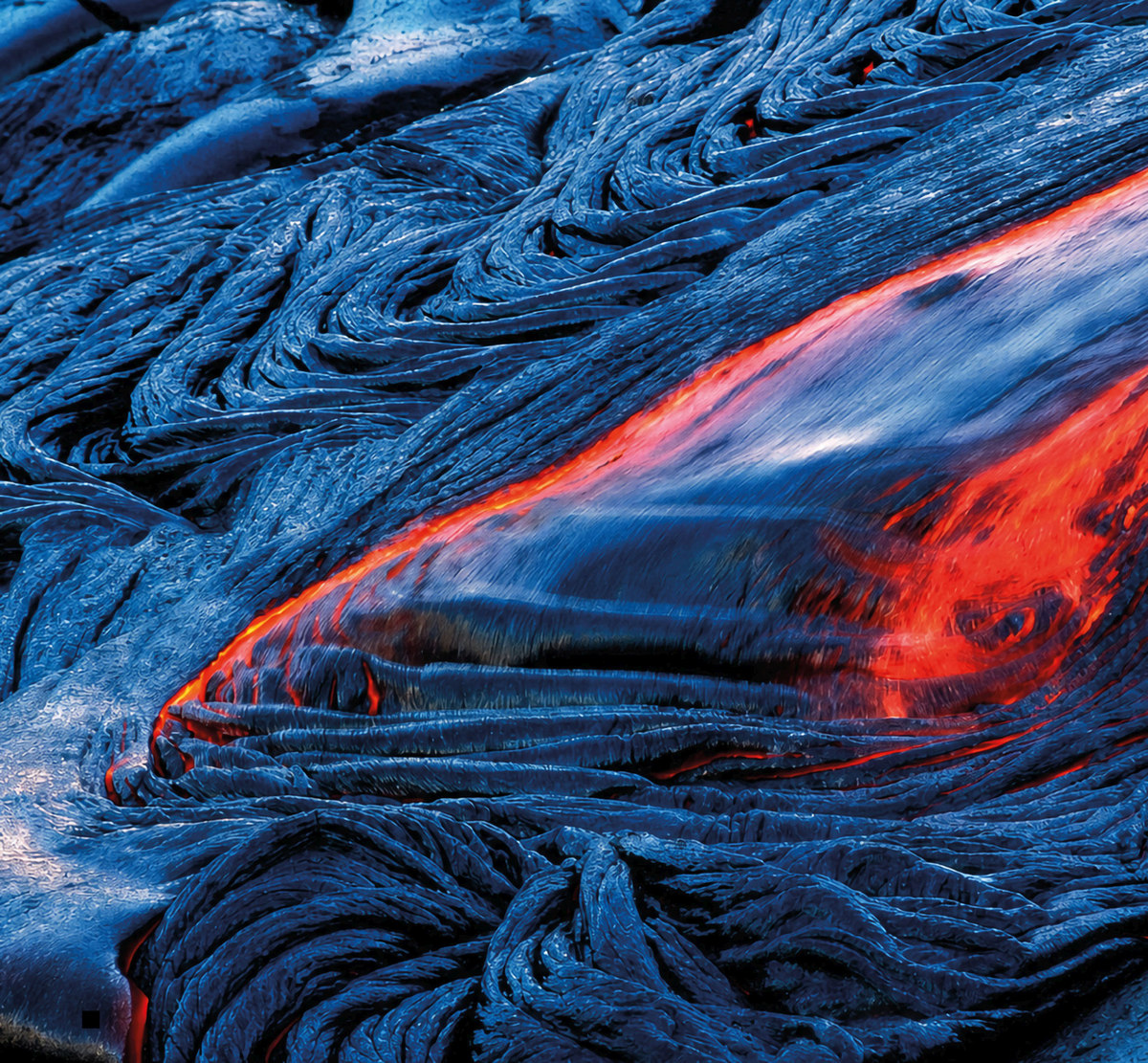
Gravity-driven flows are expected to decelerate as they spread [1]. Pour honey on a plate, release mud down a slope, or watch lava advance: in every case the flow front slows down. This common observation results from a generic physical balance (see figure 1). In the overdamped limit, motion arises from a competition between hydrostatic pressure gradients, which drive the flow, and viscous or frictional stresses, which resist it. As spreading causes the layer to thin, the driving pressure gradient decreases while the basal (frictional) surface increases. Gravity-driven flows thus invariably slow down as they spread [2,3].
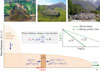 |
FIG. 1 (a) Examples of geophysical gravity-driven flows and their laboratory analogue: the dam-break configuration. In conventional spreading flows, a depth-averaged force balance on a fluid element of width dx shows that the hydrostatic pressure gradient arising from variations in flow thickness h(x,t), is balanced by basal viscous or frictional stresses τb. As the layer thins, the driving pressure decreases and the front velocity V(t) decays in time. Different fluid rheologies modify the resulting spreading power-law dynamics, but all predict decelerating fronts. |
This argument is remarkably general. It applies not only to ordinary Newtonian liquids, but also to a broad class of complex fluids. Whether the rheology is shear-thinning, viscoplastic, or strongly nonlinear, theory predicts spreading laws in which the front velocity decreases with time. Rheology can change the form of the slowdown, but not the expectation of deceleration itself.
That is why shear-thickening suspensions are so surprising. When released onto a horizontal surface, they exhibit entirely different dynamics. Rather than maintaining a rounded shape and slowing down, the flow self-organizes into a steep moving front — a liquid dam — that propagates at constant speed, independent of layer thickness, released volume, and even slope angle [4]. This behavior is not a simple variant of conventional spreading, but a breakdown of its underlying logic: the front is no longer a passive consequence of the flow — it becomes the structure that controls it.
When a fluid becomes a solid
Some suspensions behave in a deeply counterintuitive way: the more strongly they are forced, the more they resist deformation. A familiar example is the mixture of cornstarch and water, often called ‘Oobleck’. When pressed softly, it flows like a liquid, but when struck suddenly, it responds like a solid.
This striking rheological behavior, known as discontinuous shear thickening or shear jamming, originates at the scale of individual grains (see figure 2 and [5,6]). At low stress, particles remain separated by microscopic repulsive forces, and the suspension flows easily, much like an ordinary viscous liquid with a viscosity η0(ϕ) depending on the particle concentration ϕ. But when the applied stress exceeds a critical threshold τc(ϕ), those repulsions can be overcome and particles come into direct frictional contact. The suspension then abruptly becomes much harder to deform, and may even jam into a transient solid-like state.
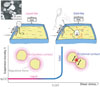 |
FIG. 2 Cornstarch particles (d ~ 15 μm) suspended in water form a shear-thickening suspension. At low stress, particles interact through repulsive forces and the suspension remains liquid-like with a viscosity η0(ϕ). Above a critical stress τc(ϕ), frictional contacts emerge, the viscosity increases sharply, and the material can enter a jammed, solid-like state. |
Rather than simply arresting the flow, this tendency to jam can give rise to remarkably rich dynamics. It produces impacts strong enough to run across cornstarch pools, as well as unusual resistance laws in pipes [7] and surface-wave instabilities in inclined flows [8]. In all these cases, jamming does not merely oppose motion — it organizes it. Gravity-driven spreading provides another striking example: shear-induced jamming does not stop motion, but instead creates a moving, load-bearing structure: a ‘liquid dam’.
The liquid dam: when the front takes control
Our experiments reveal that dense shear-thickening suspensions spread in a fundamentally different way from ordinary fluids (see figure 3). Rather than spreading with a rounded shape and decelerating, the material self-organizes into a sharp, nearly vertical front that propagates at constant speed — a striking departure from conventional gravity-driven spreading.
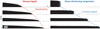 |
FIG. 3 Successive flow profiles comparing the spreading of a Newtonian viscous liquid and a shear-thickening suspension, highlighting the contrast between conventional decelerating spreading and the constant-speed propagation of a liquid dam (adapted from [4]). |
The mechanism underlying this steady propagation was uncovered by measuring the free-surface velocity field, which reveals a localized overspeed at the front (see figure 4a). At the leading edge, particles jam into a dense frictional region (highlighted in blue) that supports much of the pressure generated by the fluid behind it. This jammed region acts as a moving dam. Meanwhile, a thin liquid-like layer near the free surface continuously overflows this barrier, sustaining the motion of the front.
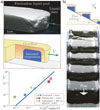 |
FIG. 4 (a) Photograph and schematic of the liquid dam: a jammed front acts as a moving barrier while a thin overflow layer sustains propagation. This simple physical picture predicts a front speed scaling as V ~ τc(ϕ)2/ρgη0(ϕ) and is validated across different shear-thickening suspensions. (b) Stairwaves: a train of liquid dams spontaneously forms when an initially horizontal layer is tilted, illustrating the robustness of the mechanism beyond dam-break flows (adapted from [4]). |
This flow structure creates an unusual division of labor: the jammed region bears the load, while the overflow layer provides mobility. Together, they form a self-organized structure capable of propagating steadily without slowing down.
Combining mass conservation with force balance in the frontal region further shows that the propagation speed is not controlled by the flow thickness or the amount of released material, but instead by the suspension rheology — and consequently by the particle concentration ϕ — scaling as V ~ τc(ϕ)2/ρgη0(ϕ) (see figure 4a). In other words, the speed is selected by the material itself and, unlike conventional gravity-driven spreading, becomes independent of flow volume and geometry.
Remarkably, this prediction holds across different particle concentrations, suspension compositions, horizontal and inclined configurations, and even in spontaneously forming ‘stairwaves’, where multiple and successive liquid dams travel downslope (see figure 4b). Hence, the liquid dam defines a new regime of gravity-driven flow, not governed by conventional spreading dynamics but instead by a self-organized, moving jammed front.
Why it matters
The liquid dam reveals a previously unrecognized way in which complex fluids can move under gravity. In classical spreading, motion results from a balance between driving forces and dissipation distributed throughout the flow. Here, dissipation localizes in a self-organized jammed front that controls the propagation speed through material properties.
This shift in perspective may extend far beyond shear-thickening suspensions. Many geophysical and industrial materials — muds, debris slurries, fresh concrete, mineral tailings, dense food pastes — consist of particles suspended in liquid and can develop frictional interactions under stress. In such systems, front dynamics may play a far more active role than is usually assumed, particularly in geophysical settings. These results may help explain why some gravity-driven materials remain unexpectedly mobile — a longstanding puzzle in hazard dynamics. Although the dissipative front observed here arises from shear-thickening behavior — also proposed for crystal-rich lava, though not yet experimentally confirmed [8] — similar effects may arise through other mechanisms, such as cooling-induced solidification in lava [9] or boulder segregation in debris flows [10,11]. In all these cases, the front may become the dominant source of resistance and control the flow dynamics.
More broadly, the liquid dam suggests that jamming is not only a route toward arrest and rigidity. It can also organize motion: solidification here does not stop the flow — it sustains it.
About the authors

Alexis Bougouin is a postdoctoral researcher, formerly at IUSTI (Aix-Marseille Université, France) and now at LMV (Université Clermont Auvergne, France) working at the intersection of fluid mechanics and volcanology.

Henri Lhuissier is a CNRS researcher at IUSTI (Aix-Marseille Université, France) working on the flow of fluids and heterogeneous materials.

Yoël Forterre is a CNRS researcher at IUSTI (Aix-Marseille Université, France) working on soft matter physics, from plant biomechanics to granular materials and suspensions.

Bloen Metzger is a CNRS researcher at IUSTI (Aix-Marseille Université, France) working at the intersection of fluid mechanics, granular suspension dynamics and soft matter physics.
References
- R. Delannay, A. Valance, A. Mangeney, O. Roche, P. Richard, J. Phys. D Appl. Phys. 50, 053001 (2017) [Google Scholar]
- H. E. Huppert, J. Fluid Mech. 121, 43 (1982) [Google Scholar]
- N. J. Balmforth, R. V. Crater, P. Perona, A. C. Rust, R. Sassi, J. Non-Newton. Fluid Mech. 142, 63 (2007) [Google Scholar]
- A. Bougouin, H. Lhuissier, Y. Forterre, B. Metzger, Phys. Rev. Lett. 136, 158202 (2026) [Google Scholar]
- R. Mari, R. Seto, J. F. Morris, M. M. Denn, J. Rheol. 58, 1693 (2014) [CrossRef] [Google Scholar]
- M. Wyart, M. E. Cates, Phys. Rev. Lett. 112, 098302 (2014) [Google Scholar]
- A. Bougouin, B. Metzger, Y. Forterre, P. Boustingorry, H. Lhuissier, PNAS 121, e2321581121 (2024) [Google Scholar]
- B. Darbois Texier, H. Lhuissier, Y. Forterre, B. Metzger, Comm. Phys. 3, 232 (2020) [Google Scholar]
- J. V. Smith, J. Volcanol. Geotherm. Res. 79, 1 (1997) [Google Scholar]
- M. S. Stasiuk, C. Jaupart, R. Stephen, J. Sparks Influence of cooling on lava-flow dynamics. Geology 21, 335 (1993) [Google Scholar]
- C. Ancey, J. Non-Newton. Fluid Mech. 142, 4 (2007) [Google Scholar]
- T. de Haas, L. Braat, J. R. Leuven, I. R. Lokhorst, M. G. Kleinhans, J. Geophys. Res. Earth Surf. 120, 1949 (2015) [Google Scholar]
All Figures
|
FIG. 1 (a) Examples of geophysical gravity-driven flows and their laboratory analogue: the dam-break configuration. In conventional spreading flows, a depth-averaged force balance on a fluid element of width dx shows that the hydrostatic pressure gradient arising from variations in flow thickness h(x,t), is balanced by basal viscous or frictional stresses τb. As the layer thins, the driving pressure decreases and the front velocity V(t) decays in time. Different fluid rheologies modify the resulting spreading power-law dynamics, but all predict decelerating fronts. |
| In the text | |
|
FIG. 2 Cornstarch particles (d ~ 15 μm) suspended in water form a shear-thickening suspension. At low stress, particles interact through repulsive forces and the suspension remains liquid-like with a viscosity η0(ϕ). Above a critical stress τc(ϕ), frictional contacts emerge, the viscosity increases sharply, and the material can enter a jammed, solid-like state. |
| In the text | |
|
FIG. 3 Successive flow profiles comparing the spreading of a Newtonian viscous liquid and a shear-thickening suspension, highlighting the contrast between conventional decelerating spreading and the constant-speed propagation of a liquid dam (adapted from [4]). |
| In the text | |
|
FIG. 4 (a) Photograph and schematic of the liquid dam: a jammed front acts as a moving barrier while a thin overflow layer sustains propagation. This simple physical picture predicts a front speed scaling as V ~ τc(ϕ)2/ρgη0(ϕ) and is validated across different shear-thickening suspensions. (b) Stairwaves: a train of liquid dams spontaneously forms when an initially horizontal layer is tilted, illustrating the robustness of the mechanism beyond dam-break flows (adapted from [4]). |
| In the text | |
Current usage metrics show cumulative count of Article Views (full-text article views including HTML views, PDF and ePub downloads, according to the available data) and Abstracts Views on Vision4Press platform.
Data correspond to usage on the plateform after 2015. The current usage metrics is available 48-96 hours after online publication and is updated daily on week days.
Initial download of the metrics may take a while.