


| Issue |
Europhysics News
Volume 57, Number 2, 2026
Education in the age of the AI
|
|
|---|---|---|
| Page(s) | 13 - 15 | |
| Section | Features | |
| DOI | https://doi.org/10.1051/epn/2026209 | |
| Published online | 29 May 2026 | |
Generative AI will change the way physics is taught and assessed
1
Independent Physics Educationalist based in East Yorkshire, UK
2
Higher Education Accreditation Manager, The Institute of Physics, London, UK
Abstract
It is not too long ago since generative AI tools, such as ChatGTP, were being discussed within Arts and Humanities for their ability to generate good quality essays with seemingly no easy or reliable method of detecting their use, but quantitative subjects like physics seemed immune. AI tools did not seem to be very good at solving problems, and as problem solving in all its forms is a huge part of a sound physics education, generative AI did not seem to pose much of a threat. Those days are no more. Generative AI can now solve pretty much any problem we might set to an undergraduate and we face the same challenges that beset our colleagues in the Arts and Humanities.
© European Physical Society, EDP Sciences, 2026
Generative AI presents both challenges and opportunities. Most obviously, if students are set coursework, of whatever kind, with the intention that that marks awarded to the attempted solution should count towards a grade, educators need to be confident that students have genuinely done the work. This has led to calls in the UK for a return to timed, unseen examinations as the only way to be sure that students’ knowledge and understanding is tested. This raises two immediate issues. First, although the timed examination has long been a feature of many physics degrees, they are not effective tests of conceptual understanding, they widen inequity, and it is by no means clear that they will remain appropriate assessment tools in an age of AI. Secondly, emphasizing the threat to the integrity of current assessment methods underplays the other, potentially very significant, changes that the emergence of generative AI will bring about. This article offers a personal view of the challenges to learning and assessment rising from the emergence of generative AI. We are not experts in AI, rather we have long been involved in accreditation of physics degrees in the UK and Ireland (see for example, Knowledge and skills changes to accreditation herald pedagogical transformation in the UK, David Sands, Europhysics News 50/5-6, 2019, p. 38-40) and are deeply concerned about the potential impact of AI on educational standards.
 |
FIG. 1 Rodin’s The Thinker sitting in a Petri dish. Scientific observations of thinking and reasoning have revealed complex mechanisms like mental modelling and dual processing theories that can inform approaches to education. Note: this picture was generated using AI. |
The introduction of any new technology inevitably means that some skills are either no longer needed or not used to the same extent. Mental arithmetic has suffered from the ubiquity of electronic calculators. Young people rely on digital time pieces and struggle to read an analogical clock. Are these important? Probably not, but AI poses a different challenge. It is no longer necessary to possess a wide-ranging knowledge, nor is it necessary to know how to use that knowledge. AI threatens the very foundations of education. Unless we can define what students should know and be able to do in the age of AI, and therefore what they should be taught, how are we going to produce effective graduates? AI threatens not only the future of higher education but the future of physics as a discipline, not necessarily because it will be able to replace physicists, but because we might not be able to produce physics graduates with the necessary knowledge and skills. This is the real conundrum. AI is not foolproof. It is well known that it hallucinates, but in these early days there are people with sufficient knowledge to recognise when the conclusions or arguments AI generates are false. However, if AI is allowed to subvert the normal processes of thinking and reasoning, how will we produce people with such knowledge and expertise?
The conventional approach to thinking and reasoning, at least within the UK, is to see cognition as a heirarchy of ever more complex processes as set out in Bloom’s taxonomy. However, modern theories of thinking and reasoning suggest a very different set of mechanisms. There isn’t space in an article of this nature to describe these theories in detail, but they may be illustrated with an example of the kind of qualitative question often used to test conceptual understanding. It is a well-known question and you might be familiar with it. Suppose a small wooden rowing boat on a lake contains a very large stone. The occupant of the rowing boat lifts the stone and drops it overboard where it immediately sinks to the bottom of the lake. As measured against the side of the boat, does the level of water rise or sink? The answer might be obvious to you, but the process by which the answer is arrived at will not be at all obvious. Very likely, you were building up a mental image of the situation as you were reading the text. This ability to build iconic, pictorial representations of the world around us is known as mental modelling and there is substantial evidence that this, rather than logic, is the primary mechanism of human reasoning.
One of the features of mental models is that we can animate them. Mental models do not consist of a sequence of static mental images and as you constructed your mental model you might well have imagined the occupant of the boat lifting the stone and dropping it. You might also have imagined the stone sinking and the boat rising in the water. However, the last depends on whether you implicitly understand the connection between the load in the boat and its depth in the water. If you do not, you have no basis for imagining the boat rising as the stone is released overboard.
This kind of reasoning involves very few cognitive resources. The processes of constructing mental images and animating them are automatic and the conclusions arrived at by such processes would be considered intuitive. Nonetheless, they can be surprisingly accurate and the mental modelling account of reasoning explains very simply why even young children can reason effectively when, according to Piaget, the ability to reason logically does not develop until just before the teenage years and continues to develop through adolescence.
Intuitive reasoning is not always correct and not always possible. Had the question asked about the absolute level of water as measured against an external mark, an intuitively generated answer would be unlikely as there is no obvious relationship between the load in the boat and the total displacement of water. Then, logic would have to be used to build the mental model. Once constructed, though, it is available for future use. Suppose that instead of a stone, the boat contains a large volume of something, say polystyrene, that has a significantly lower density than water. If posed entirely independently of the situation with the stone, it is possible that the preceding mental model would not be invoked and reason would be required to work out what would happen. However, if it were asked as an extension of the first question, it is possible that an intuitive line of reasoning along the lines of greater density than water, the boat rises ⇒ lower density than water, the boat sinks. Such a conclusion would, of course, be incorrect, but whether the reasoner would recognise this and rethink the answer depends on the reasoner’s state of knowledge and understanding.
This process of generating an intuitive answer and then rethinking the problem logically in response to self-generated doubts is known as dual processing. Historically, dual processing theories and mental modelling have developed independently, but they appear to be connected. Mental models that are either cued or generated by automatic processes might lead to correct answers, but they might also be incorrect, but if the incorrect solution seems believable and there is insufficient reason to doubt it, the logical reasoning that will lead to the correct solution will not be initiated.
Mental models can be very specific, which can lead to the appearance of fragmented knowledge or inconsistent reasoning. The physics education research literature is full of examples of students who can apply a law or principle in one context but not another, although we are not aware of examples involving Archimedes’ principle. So what does this all mean for physics education in the age of AI?
As ever, students need to be able to think and reason. This is especially so with AI that does not produce totally reliable outcomes. Students using AI will need to be able to appraise the outcomes critically. They will need practice in building and using mental models of concepts in a range of contexts in order to build a coherent framework and to recognise when an argument might be false. The conventional approach of setting students problems to be solved in their own time will no longer suffice as it will not be clear that students have done the work. This will be a matter of the integrity of assessment if that is the purpose of the work, but it is also about ensuring that students do the things they need to do to develop their knowledge, skills and understanding. One way to ensure that students have actually built and used models would be to find room within the curriculum for extensive inclass problem solving, but educational research may well reveal other effective approaches, possibly involving different forms of assessment.
Generative AI is very likely to affect approaches to assessment. Assessment drives learning. If students face assessments that predominantly require recall with limited solving of a known type of numerical problem, students will put their effort into memorising information and familiarising themselves with examples of the kind of problem they are likely to face. If we want students to develop their abilities, possibly with the use AI, the assessment should focus on processes rather than outcomes. Then, there is simply no advantage to using AI to solve a problem in order to find the answer, but there is every benefit to using AI to understand the nature of a problem and its solution.
Currently, assessing processes is difficult. There are some examples of such assessments within the literature, but the practice is not widespread. Assessing thinking and reasoning, whether formatively for development or summatively for grading, is likely to involve some kind of interaction between the assessor and the student. In a conventional setting this would be expensive of staff time, but it is possible that robust AI systems can be developed that will undertake the task reliably. This is a fertile area for further research.
In summary, generative AI poses a significant challenge, but it also presents opportunities for educators. Other articles in this issue focus on some of the ways educators are using AI now to the benefit of students and staff and such is the pace of development that what AI cannot do now will very likely be possible very shortly. However AI is used, it is vital that the thinking and reasoning processes essential to effective learning are not by-passed and the physics degree of the not too-distant future is likely to look very different. If extensive supervision of in-class activities is needed, this could lead to further differentiation of teaching from research, which could pose a challenge for the discipline itself. One thing seems clear, though: AI is here to stay and students are already using it. How they use it and what benefit they derive from it will depend very much on what is expected from them by way of assessment. The challenge facing educators to develop and adapt is thus very clear.
About the Authors
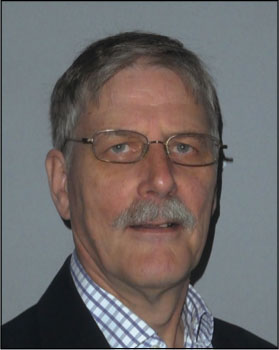
David Sands has specialised in physics education and is a Fellow of the Institute of Physics, a Principal Fellow of the Higher Education Academy and National Teaching Fellow. As a former chair of the EPS Physics Education Division, he has worked extensively to promote physics education within Europe.

Robyn Henriegel is the Higher Education Accreditation Manager at the Institute of Physics. She is responsible for accrediting physics degrees in the UK and Republic of Ireland and has over 25 years of experience in accreditation and professional standards.
All Figures
 |
Who is doing the work? Maintaining the value of a degree in the age of AI. |
| In the text | |
|
FIG. 1 Rodin’s The Thinker sitting in a Petri dish. Scientific observations of thinking and reasoning have revealed complex mechanisms like mental modelling and dual processing theories that can inform approaches to education. Note: this picture was generated using AI. |
| In the text | |
Current usage metrics show cumulative count of Article Views (full-text article views including HTML views, PDF and ePub downloads, according to the available data) and Abstracts Views on Vision4Press platform.
Data correspond to usage on the plateform after 2015. The current usage metrics is available 48-96 hours after online publication and is updated daily on week days.
Initial download of the metrics may take a while.