


| Issue |
Europhysics News
Volume 57, Number 1, 2026
Quantum physics
|
|
|---|---|---|
| Page(s) | 19 - 21 | |
| Section | Features | |
| DOI | https://doi.org/10.1051/epn/2026109 | |
| Published online | 16 March 2026 | |
Modelling josephson junctions for superconducting quantum computing
1
Institute for Theoretical Nanoelectronics (PGI-2), Forschungszentrum Jülich, 52428 Jülich, Germany
2
Quantum Research Center, Technology Innovation Institute, Abu Dhabi 9639, United Arab Emirates
Abstract
Josephson junctions are non-linear circuit elements with low dissipation, which makes them suitable building blocks for artificial atoms: macroscopic objects which display quantum behavior. Despite significant progress, the error rates achieved when using these atoms as qubits are still too high for the most useful applications of quantum computing. Accurate theoretical modelling can indicate the way to mitigate some of these errors.
© European Physical Society, EDP Sciences, 2026

From superconductivity to qubits
In the superconducting state, an electric current can flow without dissipation, which is why it is called a supercurrent. Superconductivity, discovered in 1911 by Kamerlingh Onnes (1913 Nobel Prize in physics) is arguably one of the most fascinating states of matter: electrons join into so-called Cooper pairs and condense into a new state. This state is characterized by a complex order parameter having both a phase φ and an amplitude Δ, the latter related to a finite gap for excitations and changes in the former to supercurrents. The theoretical explanation of superconductivity, published in 1957 by Bardeen, Cooper and Schrieffer (1972 Nobel Prize in Physics) took more than 40 years. Just a few years later, in 1962, Josephson (1973 Nobel Prize in Physics), predicted that a supercurrent could flow even through a junction, a device in which the superconductor is interrupted by a thin insulating barrier; this phenomenon is now known as the DC Josephson effect, see Fig. 1(a).
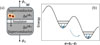 |
FIG 1 (a) schematic depiction of a Josephson junction: two superconductors (with order parameter amplitude Δ and phase φ) are separated by a thin insulating barrier. When a phase difference is present, a non-dissipative current, carried by Cooper pairs, can flow across the structure (Josephson effect). (b) Potential energy landscape of a current-biased Josephson junction (tilted-washboard potential). The phase difference behaves like a particle in a potential well. The 2025 Nobel Prize in Physics was awarded for demonstrating two macroscopic quantum effects: quantization of the energy levels and quantum tunnelling between wells. |
The main prediction by Josephson, initially doubted by Bardeen, was quickly verified experimentally, and it led Leggett (2003 Nobel Prize in Physics) to propose [1] that, thanks to their low dissipation, superconducting circuits comprising Josephson junctions could be used to explore a fundamental question: do macroscopic objects obey quantum mechanics? This question motivated the experiments that earned Clarke, Devoret, and Martinis the 2025 Nobel: they showed that the phase difference across a Josephson junction behaves like a quantum particle that displays quantized energy levels [2] and can tunnel through a barrier [3], see Fig. 1(b).
Based on their measurement, the three Nobelists expected that a quantum superposition of the ground and excited state of this “phase particle” would have a lifetime (coherence time) in the nanosecond range. The verification of this expectation had to wait more than a decade, when the first superconducting qubit, known as the “Cooper pair box”, was demonstrated [4]. Over the years, many alternative qubit designs have been proposed, most notably the transmon, whose coherence time has been recently pushed to the millisecond regime, an improvement of over 5 orders of magnitude.
The above historical summary shows how important the low dissipation of Josephson junctions is. Interestingly, Josephson also predicted a peculiar dependence of dissipation on phase difference: dissipation should be minimized when the phase difference is π. This dependence arises from the properties of Bogoliubov quasiparticles, the fundamental excitations in superconductors that are a coherent superposition of electrons and holes; at phase difference π, the destructive interference between these two components suppresses dissipation. Efforts to check experimentally this second prediction in the 1970s and 80s were inconclusive. The high sensitivity of qubits to all dissipation mechanisms finally enabled the measurement of this interference effect in the group of Devoret in 2014 [5].
Probing the current-phase relationship
The DC Josephson effect generally happens between two weakly connected superconductors, but the relationship between current and phase depends on the details of the connection. In the case of a thin insulating barrier, the current is proportional to the sine of the phase difference, with the proportionality constant being the critical current, the maximum supercurrent that can flow across the junction. The sinusoidal dependence is obtained in the theoretical limit in which the barrier is modeled as comprising an infinitely large number of transmission channels of infinitesimally small transparency. In real devices, the number of channels is of course finite, typically in the millions for junctions used in qubits, and their transparencies are small but finite. More importantly, the barrier growth is a stochastic process that leads to its thickness being non-uniform and hence to a distribution in the channel transparency, see Fig. 2(a).
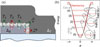 |
FIG 2 (a) Lateral view schematic of a typical nanofabricated superconductor–insulator–superconductor junction. Bottom and top film have order parameter amplitudes ΔB and ΔT. We depict a distribution of transmission channels T1, …, TN, most (green) of low and few (red) of high transparency. (b) Energy levels for a purely cos(φ) potential (grey) vs realistic potential including higher-harmonics (red). There is a discrepancy between the energy levels in the two models, which generally increases at higher levels. Adapted from [6]. |
The precise shape of the current-phase relation determines the exact energies of the quantized levels first detected by Martinis, Devoret, and Clarke. Modern qubits enable much more precise spectroscopic measurements of the energy levels of the “phase particle” and stringent comparison to theory [6]. In a transmon, which is made of a Josephson junction shunted by a capacitor, measuring the energies of the first two excited states should be enough to determine both the critical current and the charging energy, and consequently enable the calculation of the energies of the higher levels. This simple procedure does not work, as the energies are found to significantly deviate from expectations [Fig. 2(b)]. By including in the model the fluctuations in the barrier thickness, good agreement between theory and experiment can be obtained.
The properties of the barrier are not the only possible source influencing the energies of the levels: an inductance inserted between the junction and the capacitor has similar effects. Quantifying the respective roles of barrier and stray inductance is the subject of ongoing research [7].
Gap asymmetry
The precise measurement of the energy levels shows that more detailed modeling of the DC Josephson effect is needed to reconcile experiments with theory. This also holds true for the lifetime of qubits. In this case, the additional ingredient needed in the model has to do with how Josephson junctions are typically fabricated: first, an aluminum film a few tens on nm thick is deposited. Then the film is oxidized, and finally a second, thicker film is deposited on part of the first one to form the junction [cf. Fig. 2(a)]. Aluminum is peculiar among superconductors in that its superconducting gap (the minimum energy for quasiparticles, see Fig. 3) grows with the inverse thickness for films thinner than a few hundred nm. Therefore, the top film in the junction has a lower gap than the bottom one, ΔT<ΔB, leading to “gap asymmetry” between the two sides of the junction.
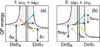 |
FIG 3 Quasiparticle density of states (DoS) schematic (light shaded regions) for the bottom and top superconducting films in a junction, characterized by the energy gaps ΔB>ΔT. The states occupied by quasiparticles (QP) are identified by darker color. The arrows denote the quasiparticle tunneling events for two choices of gap asymmetry ωBT exemplifying (a) non-protected design with qubit frequency ω10 larger than asymmetry, and (b) gap-engineered design. The dashed arrows represent the suppressed transition rates due to the gap asymmetry. Adapted from [8]. |
Recent works [8,9] showed that this gap asymmetry influences the qubits lifetime. This happens because a quasiparticle that tunnels through the junction can exchange energy with the qubit [10]. If the gap asymmetry is smaller than the qubit energy, the quasiparticle can absorb that energy when tunneling. However, if the gap asymmetry is larger than the qubit energy, a quasiparticle in the top film cannot tunnel into the bottom one (Fig. 3): a mechanism of qubit relaxation is blocked, and hence the qubit lifetime becomes longer. Conversely, at low temperatures the quasiparticles are maintained in a nonequilibrium state whose signature can be revealed by careful measurements of qubit transition rates [11].
The protection of qubit from relaxation relies on the fact that quasiparticles accumulate in the low gap film. More generally, additional protection can be obtained by adding, far from the junction, quasiparticle traps: superconducting regions with even lower gap [12, 13] or normal-metal islands [14]. Crucially, the protection afforded by gap asymmetry has been shown effective also during “quasiparticle bursts” [15]: when a high-energy particle passes through the substrate hosting the qubits, it can deposit a large energy into it in the form of phonons. These phonons can rapidly reach many qubits, break Cooper pairs and hence generate quasiparticles. These quasiparticles then relax multiple qubits in a manner correlated in space and time. These correlations are especially bad news for quantum computation, since quantum error correction is much less effective in their presence.
Qubits with large gap asymmetry have been recently used by Google to demonstrate quantum error correction [16]. Even more recently [17], they showed that a residual effect of the bursts is still limiting quantum error correction. This residual effect arises from the fact that in addition to causing relaxation, quasiparticles also lower the qubit frequency [10]. This frequency shift takes place also when tunneling is hindered, as the gap is suppressed when adding quasiparticles. This means that additional protection from quasiparticles is needed, beyond that provided by gap asymmetry. One approach is to “capture” the phonons before they reach the qubits [18, 19].
We have focused here on the effort to exploit the Josephson effect for quantum computing, but other devices based on it, such as SQUID magnetometers, are already in practical use. Even though more than 60 years have passed since Josephson’s initial prediction, the effect that bears his name is still the focus of both fundamental and applied research.
About the Authors
Gianluigi Catelani is a staff scientist at the Jülich research center (Germany) and at the Technology Innovation Institute (UAE). He works on the theoretical modelling of super-conducting devices in close collaboration with experimental groups.

Giampiero Marchegiani is senior researcher at the Technology Innovation Institute (UAE). His research focuses on quasiparticle physics and thermal transport in superconducting devices based on Josephson junctions.
Reference
- A.J. Leggett, Prog. Theor. Phys. Suppl. 69, 80 (1980) [Google Scholar]
- J.M. Martinis, M.H. Devoret, and J. Clarke, Phys. Rev. Lett. 55, 1543 (1985) [Google Scholar]
- M.H. Devoret, J.M. Martinis, and J. Clarke, Phys. Rev. Lett. 55, 1908 (1985) [Google Scholar]
- Y. Nakamura, Yu. A. Pashkin, and J.S. Tsai, Nature 398, 786 (1999) [Google Scholar]
- I.M. Pop, K. Geerlings, G. Catelani, R.J. Schoelkopf, L.I. Glazman, and M.H. Devoret, Nature 508, 369 (2014) [Google Scholar]
- D. Willsch, D. Rieger, et al., Nat. Phys. 20, 815 (2024) [Google Scholar]
- J. Kim, M. Hays, et al., arXiv:2507.08171 (2025) [Google Scholar]
- G. Marchegiani, L. Amico, and G. Catelani, PRX Quantum 3, 40338 (2022) [Google Scholar]
- S. Diamond, V. Fatemi, et al., PRX Quantum 3, 40304 (2022) [Google Scholar]
- G. Catelani, R.J. Schoelkopf, M.H. Devoret, and L.I. Glazman, Phys. Rev. B 84, 64517 (2011) [Google Scholar]
- G. Marchegiani and G. Catelani, Commun. Phys. 8, 120 (2025) [Google Scholar]
- R.-P. Riwar and G. Catelani, Phys. Rev. B 100, 144514 (2019) [Google Scholar]
- X. Pan, Y. Zhou, et al., Nat. Commun. 13, 7196 (2022) [Google Scholar]
- R.-P. Riwar, A. Hosseinkhani, et al., Phys. Rev. B 94, 104516 (2016) [Google Scholar]
- M. McEwen, K.C. Miao, J. Atalaya, et. al. Phys. Rev. Lett. 133, 240601 (2024) [Google Scholar]
- Google Quantum AI and Collaborators, Nature 638, 920 (2025) [Google Scholar]
- V.D. Kurilovich, G. Roberts, et al., arXiv:2506.18228 (2025) [Google Scholar]
- F. Henriques, F. Valenti, et al., Appl. Phys. Lett. 115, 212601 (2019) [Google Scholar]
- J.M. Martinis, npj Quantum Inf. 7, 90 (2021) [Google Scholar]
All Figures
|
FIG 1 (a) schematic depiction of a Josephson junction: two superconductors (with order parameter amplitude Δ and phase φ) are separated by a thin insulating barrier. When a phase difference is present, a non-dissipative current, carried by Cooper pairs, can flow across the structure (Josephson effect). (b) Potential energy landscape of a current-biased Josephson junction (tilted-washboard potential). The phase difference behaves like a particle in a potential well. The 2025 Nobel Prize in Physics was awarded for demonstrating two macroscopic quantum effects: quantization of the energy levels and quantum tunnelling between wells. |
| In the text | |
|
FIG 2 (a) Lateral view schematic of a typical nanofabricated superconductor–insulator–superconductor junction. Bottom and top film have order parameter amplitudes ΔB and ΔT. We depict a distribution of transmission channels T1, …, TN, most (green) of low and few (red) of high transparency. (b) Energy levels for a purely cos(φ) potential (grey) vs realistic potential including higher-harmonics (red). There is a discrepancy between the energy levels in the two models, which generally increases at higher levels. Adapted from [6]. |
| In the text | |
|
FIG 3 Quasiparticle density of states (DoS) schematic (light shaded regions) for the bottom and top superconducting films in a junction, characterized by the energy gaps ΔB>ΔT. The states occupied by quasiparticles (QP) are identified by darker color. The arrows denote the quasiparticle tunneling events for two choices of gap asymmetry ωBT exemplifying (a) non-protected design with qubit frequency ω10 larger than asymmetry, and (b) gap-engineered design. The dashed arrows represent the suppressed transition rates due to the gap asymmetry. Adapted from [8]. |
| In the text | |
Current usage metrics show cumulative count of Article Views (full-text article views including HTML views, PDF and ePub downloads, according to the available data) and Abstracts Views on Vision4Press platform.
Data correspond to usage on the plateform after 2015. The current usage metrics is available 48-96 hours after online publication and is updated daily on week days.
Initial download of the metrics may take a while.